

Electric Guitar Through an Acoustic Amp: 80s Pedal Tones
Can you play an electric guitar through an acoustic amp? You can, and with the right pedals it can sound surprisingly good. In a recent Saturday lesson, one of my students and I built an 80s rock tone using a few affordable pedals, a Marshall acoustic amp and an amp simulator. Here’s how we set it up, why it works, and some starting settings you can try at home.
Can You Play an Electric Guitar Through an Acoustic Amp?
Yes. Acoustic amps are built to reproduce sound cleanly and evenly across the whole frequency range, often with a small tweeter for extra sparkle. That’s ideal for an acoustic guitar, which already has its own natural tone.
A guitar amp works differently. It shapes the sound, rolling off the harshest high frequencies and adding warmth and character of its own. That shaping is a big part of what we think of as “electric guitar tone”. Plug an electric straight into an acoustic amp and you’ll usually hear a thin, bright, slightly brittle sound, and any distortion can turn fizzy.
The fix is to give the acoustic amp the character a guitar amp would normally provide. An amp simulator pedal does exactly that.
A few practical tips:
- Use the instrument input, not the microphone input.
- Start with the amp’s EQ flat and make small adjustments from there.
- Keep the volume sensible when using heavy distortion, as harsh high frequencies through a tweeter can be tiring on the ears and the speaker.
The Rig
- Guitar: Squier Stratocaster with two humbuckers
- Compressor: Milkbox compressor
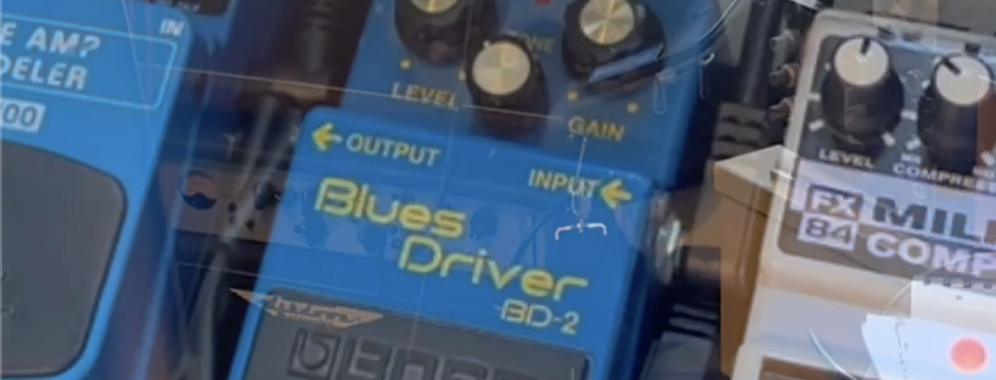
- Drive: Boss Blues Driver
- Amp simulator: Behringer amp simulator pedal
- Chorus: Donner chorus pedal
- Delay: Boss DD-7 Digital Delay
- Main amp: Marshall acoustic amp, using its plate reverb
- Second amp: Line 6 Spider IV on the Insane setting, doubling the sound
Pedal Order
Guitar → Compressor → Drive → Amp Sim → Chorus → Delay → Acoustic Amp (Reverb)
The order changes how each pedal behaves. Dynamics come first, then gain, then the amp character, followed by modulation and time-based effects. Placing the amp sim after the drive mimics pushing a real amp, and keeping chorus and delay after it stops the repeats and modulation getting distorted and muddy. Watch the video to hear some of the results!
Compressor
The compressor evens out the difference between loud and quiet notes and adds sustain. Placed first, it gives every pedal after it a steadier signal.
Starting point: Moderate compression. If there’s an attack control, set it slightly slower so your pick attack still comes through.
Drive
The Blues Driver reacts to how hard you play, so it can move from a light crunch to a thick, singing tone depending on your picking hand. Drive is the core of a sound’s personality, its determination and grit, and it gives a part its backbone.
Starting point: Gain around 9 to 11 o’clock, tone at noon, and level slightly above your clean volume. Humbuckers need less gain than you might expect.
Amp Simulator
This is the pedal that makes an electric guitar through an acoustic amp work. The Behringer amp sim added the warmth and midrange of a guitar amp and tamed the highs, so the Marshall acoustic amp could do what it does best: reproduce that sound clearly and at volume.
Starting point: Keep the amp sim’s EQ flat, then roll back the treble if anything sounds fizzy. If your amp sim has a cabinet simulation switch, try it on, as this filters the high end further.
Chorus
Chorus is the signature sound of the 80s. It creates a slightly detuned, delayed copy of your signal that doubles and thickens every note. It works like a best friend who’s got your back, standing right beside your playing so you never sound alone.
Starting point: Slow rate, depth around halfway, and the mix low enough that you notice it more when it’s switched off.
Delay
Delay adds width, depth and dimension. When it’s set well, it feels like a mind opening up to the enormity of the abyss, each note stretching into a bigger space than the room you’re playing in. The DD-7’s Modulate mode adds a gentle wobble to the repeats, which suits 80s rock nicely.
Starting point: Delay time around 350 to 450 milliseconds, feedback for two or three repeats, and the effect level low so the repeats sit behind your playing.
Reverb and Doubling
The plate reverb on the Marshall acoustic amp added a smooth, polished ambience at the end of the chain. A little goes a long way with delay already running.
To make the sound bigger, we doubled it with a Line 6 Spider IV on its Insane setting. Blending a cleaner, effects-rich tone from the acoustic amp with a high-gain tone from a guitar amp creates a wide, layered sound, much like the multi-amp setups on plenty of 80s records.
From Tone to Riffs
With the sound dialled in, we moved on to writing original riffs with a Country Glam feel, drawing on Carly Simon’s storytelling, Morrissey’s melancholy charm and Europe’s big 80s swagger. Having the right tone under your fingers changes how you write, and some riffs only appear once the sound inspires them.
Building Your Own Sound
Over 30 years of playing, teaching, and working in studios and on stage, I’ve spent a lot of time immersed in music. Much of what I’ve learned came through osmosis: chasing the sounds of my influences, experimenting with the tools and discovering how they work. These days, AI can trawl that knowledge and help us arrive much faster, and some of the charm of the old quest has gone. But it still takes human imagination to dream up something that hasn’t been heard before. When you understand the pieces, you’re free to mix your sonic personalities into a complete character that’s unique to you.
If you’d like help building your guitar sound, I teach guitar, bass, singing and songwriting in Teddington and online. Click here to book your free lesson.
Dan
Frequently Asked Questions
Will an electric guitar damage an acoustic amp?
At sensible volumes, it’s generally fine. Take care with heavy distortion at high volume, as the harsh high frequencies can strain the tweeter. An amp sim pedal helps by filtering those frequencies out.
Do I need an amp simulator to play electric guitar through an acoustic amp?
You don’t strictly need one, but it makes a big difference. Without it, an electric guitar through an acoustic amp tends to sound thin and harsh, especially with drive pedals.
What pedals work best with an acoustic amp?
An amp sim or preamp pedal is the most useful first step. Modulation, delay and reverb pedals all work well, because acoustic amps reproduce them clearly.